A new driveway is one of the first things people notice about your home, and it is also one of the hardest surfaces to get right in New Jersey. Our winters swing from freezing nights to sunny afternoons, our summers bake the pavement, and our clay-heavy soil moves as it soaks up rain. The material you pick has to handle all of that for decades.
The two most common choices for Union County homeowners are poured concrete and interlocking pavers. Both can look great and last a long time when installed correctly, but they behave very differently when it comes to cost, repairs, and how they age. Picking the wrong one for your property can mean cracks, sinking, or a redo years earlier than you planned.
This guide walks through the real trade-offs so you can decide with confidence. Every cost figure below is a general market range, not a quote. For a firm number on your specific driveway, the best step is a free on-site estimate where the slope, soil, and square footage are measured directly.
Upfront Cost: What You Pay to Install
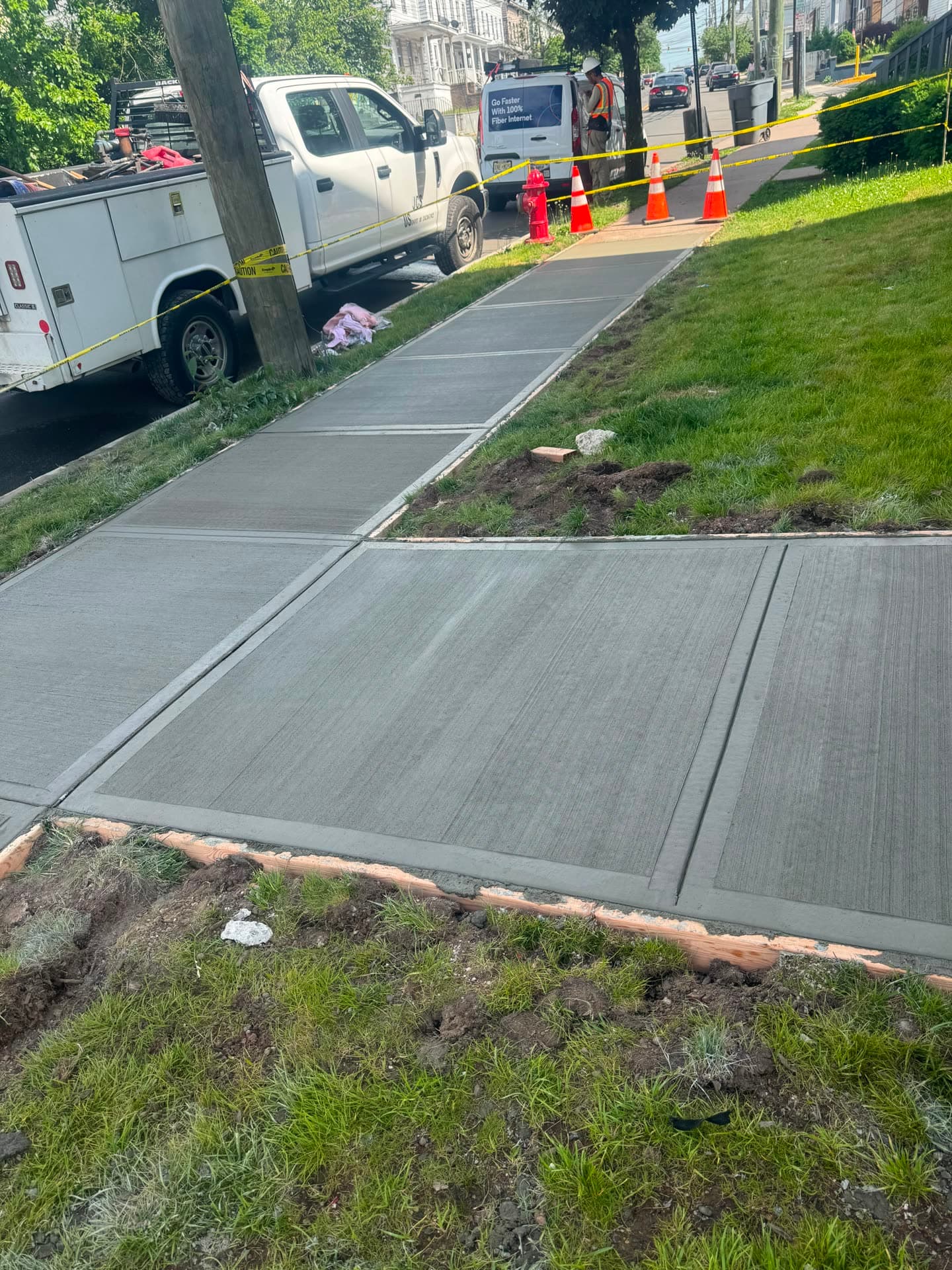
Poured concrete is usually the more budget-friendly option to install. Because it goes down as one continuous slab, labor is faster and there are fewer individual pieces to set by hand. For a standard residential driveway, poured concrete tends to land in the lower part of the typical market range, with plain gray costing less than stamped or colored finishes.
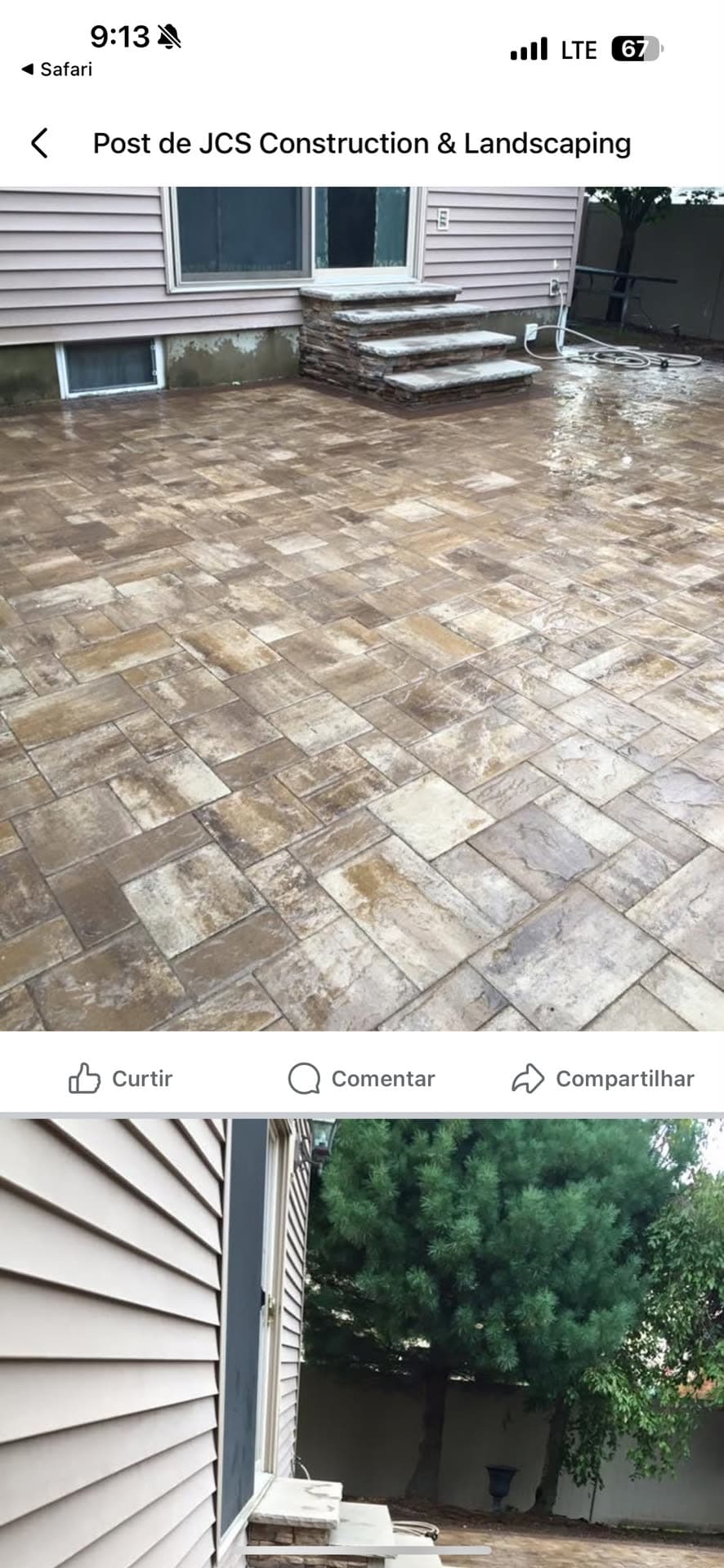
Paver driveways carry a higher upfront price. Each unit is placed and locked into a compacted base, which is slower, more detailed work. The pavers themselves also cost more than a plain concrete pour. In most local projects, pavers sit at the higher end of the range, and premium stone or custom patterns push the number up further.
Keep in mind that site conditions move these numbers a lot. Poor drainage, a steep grade, tearing out an old driveway, or reinforcing soft soil all add labor. That is exactly why an on-site look matters more than any online average.
Lifespan and Durability in NJ Conditions
A well-built concrete driveway commonly lasts around 25 to 30 years, and sometimes longer with proper drainage and sealing. Its weak point is cracking. Because it is a rigid slab, any serious ground movement or missing control joint can lead to visible cracks over time.
Pavers often outlast concrete, with many installations holding up 30 years or more. Their strength is flexibility. The interlocking joints let the surface flex slightly with ground movement instead of cracking, which suits New Jersey soil that shifts with moisture. A strong compacted base is the key to that longevity.
- Poured concrete pros: lower install cost, smooth clean surface, faster to pour, easy to keep clear of snow.
- Poured concrete cons: prone to cracking, whole sections may need replacement, color and finish are harder to change later.
- Paver pros: long lifespan, flexes with soil movement, individual units are simple to swap, high-end look.
- Paver cons: higher upfront cost, joints can grow weeds if neglected, base prep must be done right or units settle unevenly.
Maintenance and Repairs Over the Years
Concrete is low effort day to day. An occasional rinse and a fresh coat of sealer every few years keeps it in good shape. The catch comes with damage: when a slab cracks or the surface starts to spall, patching rarely looks seamless, and a bad crack can mean replacing a full section.
Pavers ask for a bit more routine attention. You may need to top up the joint sand and pull the occasional weed. The payoff is that repairs are simple and nearly invisible. If one paver stains, sinks, or chips, a crew can lift that single unit, fix the base, and reset it so the driveway looks whole again. With concrete, that kind of spot fix is far harder to hide.
Appearance and Curb Appeal
Plain concrete gives you a clean, modern, uniform look that suits many homes and stays out of the way. Stamped and colored concrete can mimic brick or stone at a lower cost than the real thing, though those decorative finishes can fade and show wear as the years pass.
Pavers are the clear winner on design range. They come in many colors, shapes, and patterns, and they read as a genuine premium hardscape rather than an imitation. For homeowners who want the entry to make a strong first impression, pavers deliver a richer, more custom look that pairs nicely with matching walkways and patios.
Freeze-Thaw, Drainage, and Resale Value
New Jersey winters are a real test. Water seeps into the surface, freezes, expands, and then thaws, and it does this over and over. A rigid concrete slab has to resist that pressure across its whole surface, so proper air-entrained mix, control joints, and sealing matter a great deal to prevent cracking and surface flaking.
Pavers handle freeze-thaw more gracefully. The joints between units give water room to move and let the surface flex, which lowers the chance of cracking through a hard Union County winter. Drainage is also easier to manage with pavers, since a permeable joint system can let rainwater filter down instead of pooling or running toward the house.
On resale, both materials help. A clean, crack-free concrete driveway signals a well-kept home and appeals to most buyers. A quality paver driveway tends to add a bit more perceived value because it looks like a premium upgrade, which can matter in a competitive neighborhood. Either way, a driveway in poor shape drags value down, so condition matters as much as material.
Installation Time and Which Should You Choose
Concrete is usually quicker to install but slower to use. Pouring and finishing a driveway often takes a day or two, yet the concrete needs to cure before you can drive on it, commonly about a week of patience. Pavers take longer to lay because each unit is set by hand, but once the last one is in and the joints are sanded, the driveway is ready to use right away.
So which is right for your home? Choose poured concrete if your top priorities are a lower upfront cost, a clean simple look, and easy snow clearing, and your site has solid drainage. Choose pavers if you want the longest life, the best curb appeal, easy invisible repairs, and better freeze-thaw performance, and you are comfortable spending more upfront for it.
Every property is different, and the right call often comes down to your grade, soil, budget, and how long you plan to stay. If you are weighing the two for a home in Union County, a free on-site estimate is the fastest way to see real numbers and a clear recommendation for your driveway.
Free Estimate
Talk to a Local Contractor
Jose Carlos and the JCS crew serve Elizabeth and Union County. Get a written estimate with no pressure.
Related Services
Serving