A retaining wall holds back tons of soil and water, and it does that job quietly for years, which is exactly why it gets ignored until something goes wrong. By the time a wall is visibly leaning, the problem usually started a season or two earlier, out of sight, in the drainage behind it.
In New Jersey the wall never gets a rest. Wet springs saturate the soil, summer storms dump water fast, and winter freeze-thaw cycles push and heave everything that holds moisture. A wall that would last decades in a dry climate takes real punishment in Union County and across the state, so a little routine attention pays off.
This guide walks through how often to inspect a retaining wall, what to actually look for, why New Jersey weather is hard on these structures, and how to know when a patch will do versus when it is time to rebuild.
How Often Should You Inspect a Retaining Wall?
For most residential walls, a good rhythm is twice a year plus after any major weather event. Spring and fall are the natural checkpoints: spring shows you what the winter did, and fall lets you clear drainage before the freeze sets in.
The extra inspections are the ones that catch problems early. Walk the wall after heavy rain, after rapid snowmelt, and after any storm that soaks the ground for days. That is when a failing drain or a saturated backfill shows its hand, and it is far cheaper to catch a bulge than to rebuild after a collapse.
- Spring: look for winter damage, heaving, and new cracks after freeze-thaw
- Fall: clear weep holes and drains before the ground freezes
- After heavy rain or rapid snowmelt: check for water pooling, seepage, and movement
- After any wall repair or nearby digging: confirm nothing shifted
- Tall walls (over about 4 feet) or walls above a driveway or walkway: check more often
What to Look For During an Inspection
You do not need special tools to run a solid inspection. Most warning signs are visible if you know what they mean. The pattern that matters is change over time, so photograph the wall from the same spots each season and compare.
Any single sign below is worth watching. Several together, or one that gets worse between inspections, means it is time to bring in a pro before the problem accelerates.
- Leaning or bulging: the wall tilting outward or a section bowing out is the most serious sign
- Cracks: stair-step cracks in block, vertical cracks that widen, or cracks that grew since last check
- Drainage failure: weep holes that never drip after rain, or water pooling behind or at the base
- Efflorescence: white chalky staining, a clue that water is moving through the wall
- Soil erosion at the base: undercutting or washed-out soil at the footing
- Missing or clogged weep holes: no path for water to escape means pressure builds up
- Separation: gaps opening between the wall and any steps, caps, or adjoining structures
Why New Jersey Weather Is Hard on Retaining Walls
The single biggest enemy of a retaining wall is water, and New Jersey delivers plenty of it. Wet springs and heavy summer storms saturate the backfill soil behind the wall. Saturated soil is heavier and pushes harder, and it holds the water that does the real long-term damage.
Then winter arrives. Water trapped in the soil and in the wall itself freezes, expands, and thaws over and over. That freeze-thaw cycle acts like a slow jack, widening cracks, loosening blocks, and heaving footings a little more each winter. A wall that drains poorly gets the worst of both problems, because the water that should have escaped stays put and freezes in place.
This is why drainage, not the blocks, is usually what decides how long a wall lasts here. A well drained wall handles New Jersey seasons for decades. A wall with nowhere for water to go starts failing within a few winters.
Drainage and Backfill Basics
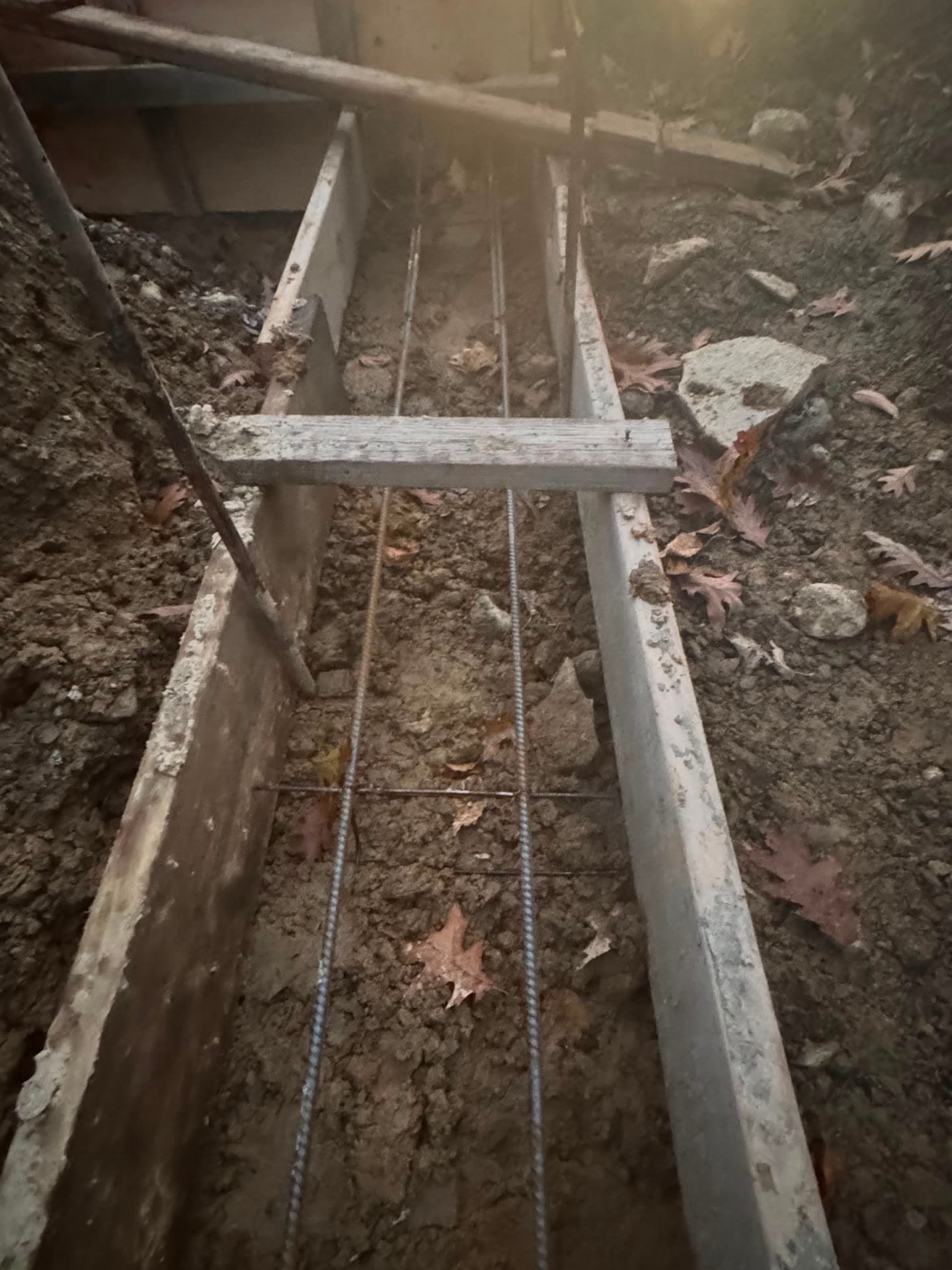
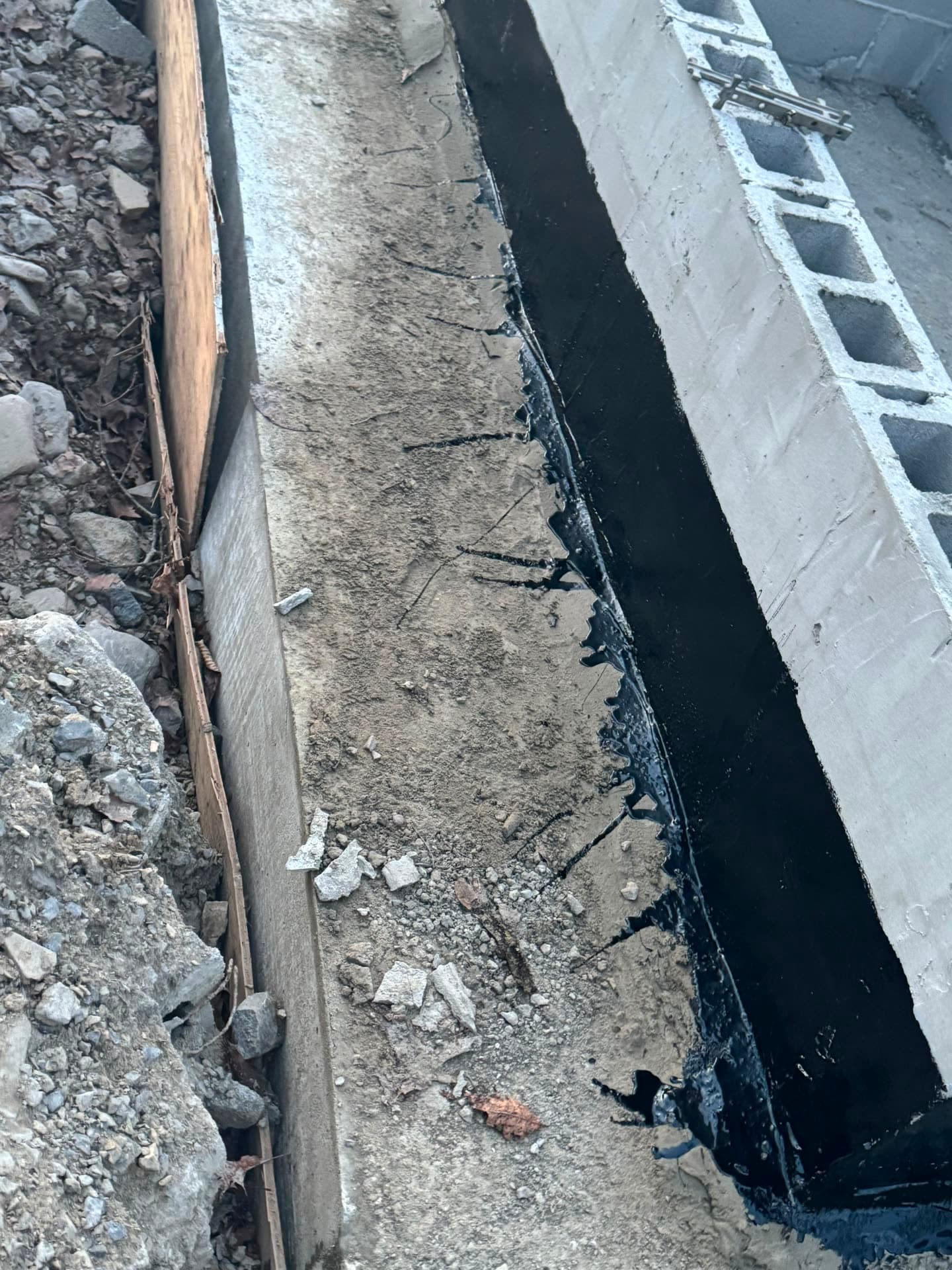
A retaining wall is really a drainage system with a face on it. Behind a well built wall there should be a layer of clean gravel, a perforated drain pipe near the base to carry water away, and weep holes or an outlet so that water has a clear exit. When any of those pieces fail, water builds up behind the wall and the pressure does the rest.
Maintenance here is mostly about keeping the water moving. Keep weep holes and drain outlets clear of dirt, leaves, and mulch. Make sure the grade above the wall slopes water away from it, not toward it, and keep downspouts and irrigation from dumping right behind the wall. If the gravel and pipe behind an older wall were never installed correctly, no amount of surface cleanup will fully fix it, and that is a conversation worth having with a contractor.
Block vs Poured vs Segmental: Maintenance Differences
Different wall types age differently, so what you watch for changes with the material.
- Segmental block (interlocking units): check for shifting or separating blocks and settling caps. The upside is that individual courses can sometimes be reset without redoing the whole wall.
- Concrete block (CMU) with mortar: watch the mortar joints for cracking and crumbling, and repoint before water gets in. Efflorescence shows up here first.
- Poured concrete: very strong, but watch for cracks and for the wall leaning as a single unit, which points to a footing or drainage problem rather than a surface issue.
- Timber walls: inspect for rot, insect damage, and rusted or failing tie-backs, since these have the shortest lifespan of the common types.
When a Repair Becomes a Rebuild (and DIY vs Pro)
Small, stable stuff is fair game for a homeowner: clearing weep holes and drains, resetting a loose cap, regrading the surface so water runs away, and repointing a small area of mortar. Cleaning and monitoring cost you nothing and catch problems early.
A repair turns into a rebuild once the structure itself is moving. A wall that leans more each season, bulges outward, has failed at the footing, or shows cracks that keep widening is telling you the soil pressure has won. At that point patching the face just hides the problem, and the fix is to rebuild with proper gravel backfill, a working drain, and the right base. That is a job for a contractor who can dig it out safely and correct the drainage, not just rebuild the same wall that already failed.
Costs vary widely with the wall height, length, material, and how much excavation and drainage work is involved, so any number you see online is only a rough range. The honest way to price it is an on-site look. JCS Construction offers a free estimate, so you can get a straight answer on whether your wall needs a tune-up or a rebuild before you spend anything.
Free Estimate
Talk to a Local Contractor
Jose Carlos and the JCS crew serve Elizabeth and Union County. Get a written estimate with no pressure.
Related Services
Serving