Foundations and retaining walls rarely fail overnight. They send warnings first, and most of those warnings are easy to see once you know what to look for. The trouble is that a hairline crack or a slightly sticky door feels minor, so it gets ignored for a season, then a year, and by the time the wall is visibly leaning the repair is far bigger and far more expensive.
Here in Union County, the soil, the water table, and the freeze-thaw cycle put steady pressure on anything that holds back earth or carries the weight of a house. A wall that looked fine in July can move over a wet spring, and a small drainage problem behind a retaining wall can turn into a full rebuild if it keeps getting ignored.
Below are seven signs that a foundation or retaining wall needs attention, why New Jersey conditions make them worse, and what a homeowner should actually do next. None of this is meant to scare you. The point is the opposite: catching these early is what keeps the bill small.
1. Stair-Step Cracks in Block or Brick
When a crack runs diagonally in a zigzag pattern, following the mortar joints between blocks or bricks, that is a stair-step crack. It usually means one part of the foundation is settling or shifting more than the rest, and the wall is tearing along its weakest line.
Thin, stable hairlines can be cosmetic. Cracks that are wider than about a quarter inch, that are getting longer, or that let in daylight or water are the ones to take seriously. A simple way to track movement is to mark the ends of the crack with a pencil and a date, then check again in a few weeks.
2. Horizontal or Bowing Walls
A horizontal crack that runs straight across a basement or retaining wall, or a wall that visibly bows inward, is one of the more serious signs on this list. It typically points to soil pressure pushing on the wall from the outside, often made worse by water building up behind it.
Unlike a stair-step crack, a bowing wall is a structural load problem, not just settling. It does not correct itself, and the pressure that caused it does not go away on its own. This is one to have looked at sooner rather than later.
3. Doors and Windows That Stick
When a foundation moves, the frame of the house moves with it. Door and window openings go slightly out of square, so doors that used to swing freely start to stick, drag on the floor, or leave uneven gaps at the top or bottom.
One sticky door in a humid week is usually just humidity. Several doors and windows across the house that all start binding around the same time, especially paired with new cracks, is a sign the structure is shifting underneath.
4. Water in the Basement or Pooling at the Base
Water is the single most common driver of foundation and retaining wall damage. Look for damp spots, staining, or actual seepage on basement walls, and for water that pools at the base of a foundation or retaining wall after rain instead of draining away.
Standing water means the ground is not shedding water the way it should, and saturated soil is heavy soil that pushes harder on your walls. Fixing the drainage is often the difference between a lasting repair and one that fails again a couple of winters later.
- Gutters or downspouts dumping water right next to the foundation
- Ground that slopes toward the house instead of away from it
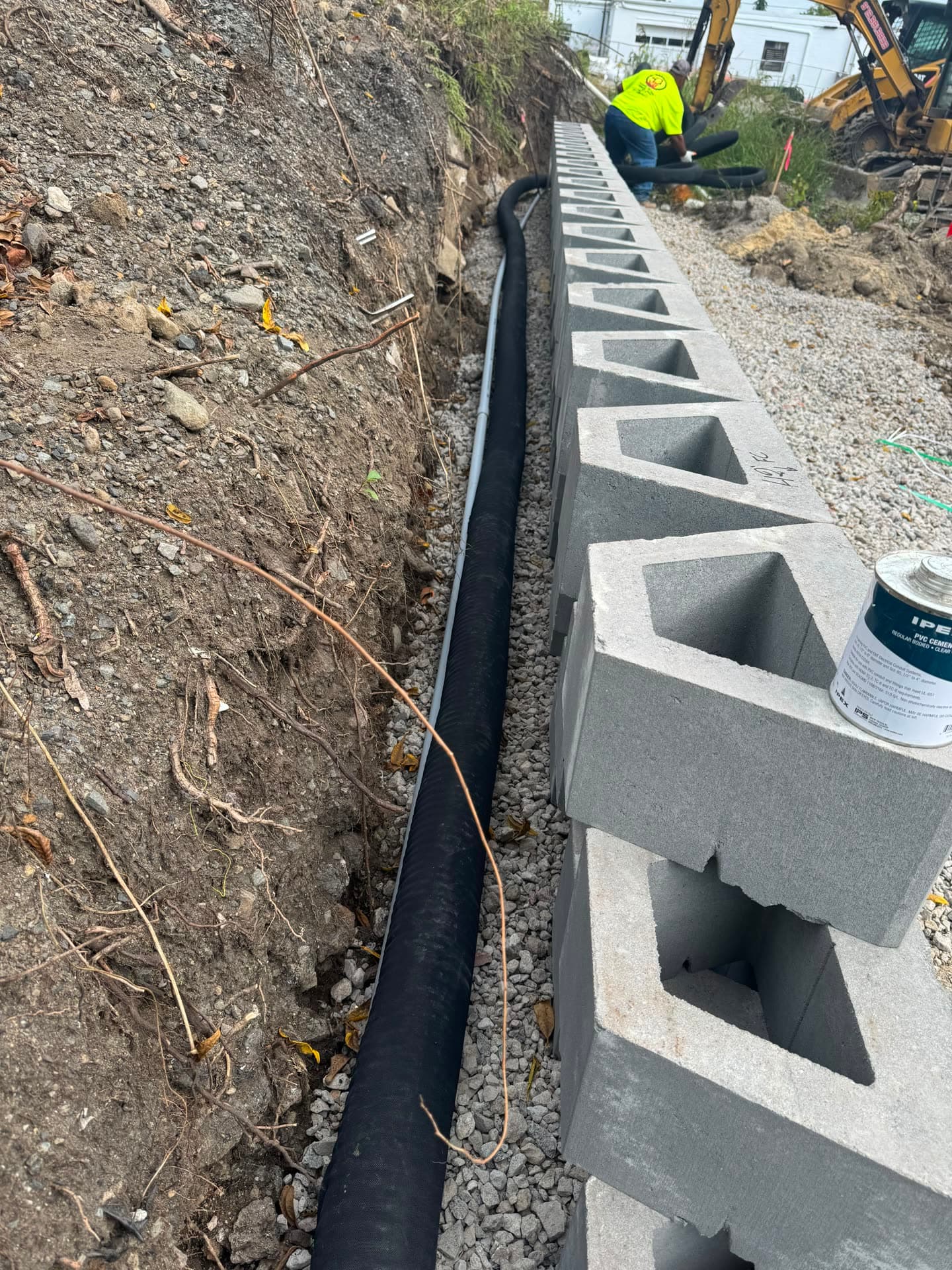
- A retaining wall with no visible weep holes or drainage outlet
- Persistent damp or musty smell in one corner of the basement
5. A Leaning or Tilting Retaining Wall
A retaining wall has one job: hold back a slope of soil. When it starts to lean, tilt forward, or bulge in the middle, it is losing that fight. This is often caused by water building up behind the wall with nowhere to go, or by a base that was not built deep or strong enough for the load.
A wall that leans a little today tends to lean more with each wet season. Once it moves past a certain point, patching is off the table and a rebuild becomes the realistic option, which is exactly why the early lean is worth acting on.
6. Gaps Between the Wall and the Soil or House
Look for new gaps where a retaining wall is pulling away from the soil it is supposed to hold, or where a section of the structure is separating from the rest of the house. A porch, chimney, or stoop that is drifting away from the main wall is telling you those two parts are settling at different rates.
These gaps often show up alongside the cracks and sticking doors mentioned above. On their own they can look like caulk failure, but a gap that keeps widening is movement, not a maintenance touch-up.
7. Efflorescence and Crumbling Mortar
That white, chalky, powdery film on concrete or block is called efflorescence. It is left behind when water moves through the wall and evaporates, carrying mineral salts to the surface. The efflorescence itself is harmless, but it is proof that water is passing through the material, and that is the real concern.
Alongside it, watch for mortar joints that are crumbling, flaking, or spooning out into loose sand when you rub them. Deteriorating mortar weakens the whole wall and gives water even more paths to travel, which speeds up every other problem on this list.
Why New Jersey Freeze-Thaw and Drainage Make It Worse
Water that gets into a crack or into the soil around a wall does not just sit there through a New Jersey winter. It freezes, and when it freezes it expands. That expansion pries cracks wider and pushes on walls from the outside. Then it thaws, the water shifts, and the cycle repeats through every cold snap. Over a few winters, a small crack that let a little water in can become a real structural issue purely from freeze-thaw.
Drainage is the other half of the story. Union County gets heavy, saturating rain, and when downspouts, grading, or a retaining wall have no clean way to move that water away, the soil stays wet and heavy. Wet soil pushes harder on foundation and retaining walls, and it holds the water that freeze-thaw then goes to work on. This is why so many repairs here are really two jobs in one: fix the wall, and fix the water that broke it.
- Freeze-thaw widens existing cracks a little more each winter
- Saturated soil weighs more and pushes harder on walls
- Poor grading and clogged downspouts keep the ground wet
- A repair that ignores drainage tends to fail again
What to Do Next (and Why You Should Not Wait)
If you are seeing one or two of these signs, the smart move is not to panic and not to ignore it. Start by documenting what you see: take dated photos, mark the ends of any cracks, and note whether the problem gets worse after heavy rain or a hard freeze. That record makes any assessment faster and more accurate.
The reason not to wait is simple math. A sealed crack and a drainage fix are modest jobs. A bowing wall that has been left for years, or a retaining wall that has leaned past the point of repair, can move into full rebuild territory. As a rough, general guide, minor crack and drainage work often lands in the low hundreds to low thousands of dollars, while a full foundation or retaining wall rebuild can run into the higher thousands. Every property is different, so those are ballpark market figures, not a quote.
The honest next step is to get eyes on it. A proper on-site look tells you whether you are dealing with a cosmetic crack or real movement, and what the fix actually involves. If you are anywhere in Union County or nearby, JCS Construction can come take a look and give you a free estimate, so you know exactly where you stand before anything gets worse.
Free Estimate
Talk to a Local Contractor
Jose Carlos and the JCS crew serve Elizabeth and Union County. Get a written estimate with no pressure.
Related Services
Serving